↓
 
Welcome to ICEMARC: Indiana County, PA 
 
  • Home
  • Licensing/Training/Education
    • ICEMARC Emergency Preparedness Program
    • ICEMARC University
  • Calendar
    • Summer Field Day Info/Sign-up
    • Winter Field Day Info/Sign-up
  • Emergency Management
  • The ICEMARC Blog
  • About Us

Welcome to ICEMARC: Indiana County, PA

Indiana County Pennsylvania's home for amateur/ham radio

Post navigation

Newer posts →
Welcome to ICEMARC: Indiana County, PA Posted on August 28, 2024 by Jeffrey TobinJanuary 7, 2025

Winlink: The Essential Communication Tool for ICEMARC Amateur Radio Operators

In today’s interconnected world, amateur radio operators have a powerful tool at their disposal that combines the reliability of radio communication with the convenience of email: Winlink. This global radio email system has become an indispensable resource for hams, especially during emergencies and disaster situations.

What is Winlink?


Winlink, formally known as Winlink Global Radio Email, is a worldwide radio messaging system that uses amateur radio frequencies to provide email services with attachments, position reporting, weather bulletins, and message relay [1](https://winlink.org). It’s built and administered by volunteers and supported by the Amateur Radio Safety Foundation.

Why Winlink Matters


Emergency Communications

One of the primary reasons amateur radio operators at ICEMARC embrace Winlink is its crucial role in emergency and contingency communications. When traditional communication infrastructure fails during disasters, Winlink can provide a lifeline for sending and receiving critical information [1](https://winlink.org) [2](https://en.wikipedia.org/wiki/Winlink).

Reliability and Accuracy

Winlink boasts an impressive 99.99% availability rate over the past 15 years, ensuring that messages are transmitted with 100% accuracy [3](http://www.ws1sm.com/Winlink.html). This level of reliability is essential when every piece of information counts, especially in emergency situations.

Versatility

Winlink supports various radio technologies, including HF, VHF, and UHF bands, as well as different protocols like PACTOR, ARDOP, and VARA [3](http://www.ws1sm.com/Winlink.html). This versatility allows operators to choose the most suitable method for their specific needs and equipment.

Interoperability

One of Winlink’s strengths is its ability to bridge different radio capabilities and protocols. This interoperability ensures that messages can be sent and received across various platforms and systems, enhancing overall communication effectiveness [3](http://www.ws1sm.com/Winlink.html). ICEMARC relies on this for emergency operations preparedness.


Getting Started with Winlink

To begin using Winlink, amateur radio operators need to:

1. Obtain a Winlink account

2. Download and install Winlink Express (the preferred client software)

3. Configure their radio equipment and interface

4. Connect to the system to activate their account [3](http://www.ws1sm.com/Winlink.html)


Practical Applications

Winlink isn’t just for emergencies. It’s a valuable tool for:

* Maritime communications for offshore sailors

* Position reporting and tracking

* Retrieving weather information and maritime safety data

* Sending messages to non-ham email addresses (within legal constraints) [1](https://winlink.org) [4](https://hamradioprep.com/winlink/) [6](https://www.reddit.com/r/amateurradio/comments/11r46ge/winlink/)


Responsible Use

As with all amateur radio activities, operators must use Winlink responsibly. The system is open for monitoring, and messages sent via amateur radio frequencies must comply with FCC regulations [5](https://winlink.org/content/us_amateur_radio_message_viewer) [6](https://www.reddit.com/r/amateurradio/comments/11r46ge/winlink/). This transparency helps maintain the integrity of the amateur radio service.


Conclusion

Winlink represents a perfect blend of traditional radio communication and modern email technology. Its reliability, versatility, and crucial role in emergency communications make it an essential tool for every amateur radio operator. By incorporating Winlink into their arsenal, hams can enhance their ability to serve their communities and stay connected in any situation. Whether you’re a seasoned operator or new to amateur radio, exploring and mastering Winlink will undoubtedly expand your capabilities and contribute to the broader ham radio community. In an age where communication is key, Winlink stands out as a robust, reliable, and indispensable resource for amateur radio enthusiasts worldwide.

Posted in Uncategorized | Leave a reply
Welcome to ICEMARC: Indiana County, PA Posted on August 19, 2024 by Jeffrey TobinJanuary 7, 2025

Understanding The Sun: Our “Cosmic Propagation DJ”

Solar weather might seem as unpredictable as your local forecast, but with some basic indices in mind, you’ll have a much better idea of what to expect when you turn on your radio. Here’s one way to thing about solar weather that may help you to understand and remember the language of solar weather.

Understanding The Sun: Our “Cosmic Propagation DJ” Consider the sun as a cosmic DJ, constantly spinning tunes that affect our radio waves. At times, it pumps out energetic beats that enhance propagation, while other moments bring slower rhythms that dampen our long-distance communications.

The Ionosphere: Nature’s Radio Mirror

The ionosphere acts as a massive mirror in the sky, reflecting our signals back to Earth. The sun’s energy charges this mirror, making it more or less effective. When the sun is active, our signals can travel further, but during quieter periods, the reach may diminish.

Solar Weather Activity

Solar Flux: The Volume Knob

The solar flux index (SFI) serves as the volume knob for solar activity. Higher numbers (above 100) indicate that the sun is cranking up the energy, which is beneficial for HF propagation. Conversely, lower numbers (below 70) suggest that the sun is taking it easy, resulting in less effective long-distance communication.

A and K Indices: The Mood Swings

The A and K indices reflect the sun’s mood swings. The K-index provides a snapshot of the last three hours, while the A-index looks at the entire day.

  • K-index: Ranges from 0-3, indicating calm conditions; 4-5 signifies unsettled conditions; 6+ indicates potentially rough propagation.
  • A-index: Values below 20 are generally favorable, while those above 30 may signal challenging conditions.

Lower numbers typically suggest steadier propagation, while higher numbers can lead to unpredictable conditions or even radio blackouts.

Sunspots: Nature’s Disco Balls

Sunspots function like nature’s disco balls, reflecting more radio-enhancing energy toward Earth. A higher sunspot count generally correlates with improved propagation, especially on higher HF bands like 20, 15, and 10 meters.

Putting it all Together

To navigate the complexities of solar weather, focus on these key indicators:

  1. Solar Flux Index (SFI): Higher values are generally better for HF propagation.
  2. K-index: Lower numbers (0-3) typically indicate more stable conditions.
  3. Sunspot Count: An increased number of sunspots often leads to enhanced propagation.

When you observe a high SFI, a low K-index, and a favorable sunspot count, it’s an excellent opportunity to engage with operators around the world.

The Bottom Line

Solar weather may seem as unpredictable as the local forecast, but with these essential indices in mind, youll know what those numbers mean for your ham radio adventures. Embrace the challenge and enjoy the ride on those ionospheric waves! 73 and happy DXing!


Posted in Uncategorized | Leave a reply
Welcome to ICEMARC: Indiana County, PA Posted on July 30, 2024 by Jeffrey TobinJanuary 7, 2025

Nerd Alert! This is a Ham Radio Post [Opening the Door to Amateur Radio]

This blog was originally posted on February 9, 2019 on the “I Hate to Blog” Blog by Dan Wolfe KN4FYR.

I’ve been doing this ham radio thing for about a year and a half now.  I have a couple more observations to add to the blog post I wrote last year.

1.   The amount of learning required to get started is not massive.  You can get started with a relative minimum of technological knowledge and if that’s all you want, you can do quite a bit.  But…

If you want to get really good at it or learn the nitty, gritty details of how and why things work, it’s a daunting task.  I’ve said before that it’s a bottomless pit of things to learn and from my perspective, it can be pretty overwhelming.  Having said that, …

2.  … established ham operators are, for the most part, more than willing to share their knowledge and experience if you just ask.  If you pop up on the air with a question, chances are pretty good that you can get an answer or at the very least a clue about how to proceed.  The experienced operators are a magnificent resource if you’re stuck or just need an explanation of something you don’t understand.

3.  If you make a mistake and do something incorrectly, most hams are very forgiving.  It’s likely that they’ve made a similar mistake at one time and they don’t hold your boo-boos against you.  I still dread screwing up, but at least there’s no ridicule from it. 

So far as I know.  (Maybe people are laughing and pointing at me on other channels.) 

4.  There’s a Young Operators’ Net on Sunday and there’s an eleven-year-old young woman who runs the net.  She’s terrific and does a really top-notch job of net control.  Hearing those young voices on the air leads me to believe that…

5.  …ham radio is not a dead hobby.  Far from it, matter of fact. 

One of the things that surprised me when I finally dove into ham radio was that technology has advanced the amateur radio hobby into the 21st century.  With at least three or four digital voice protocols and an untold number of digital data protocols, you can get a message through in any number of ways including the old standards like CW and SSB.  There are orbiting digital satellites that ham operators can use.  You can bounce a radio signal off the moon and back to Earth if you can figure out how to do that.  You can even communicate with the astronauts on the International Space Station.  If you’re willing to put in the time to study how to use these modes of communication, you can do it. 

Literally, the sky’s the limit.


http://www.arrl.org/news/actor-tim-allen-gets-his-ham-ticket-for-real

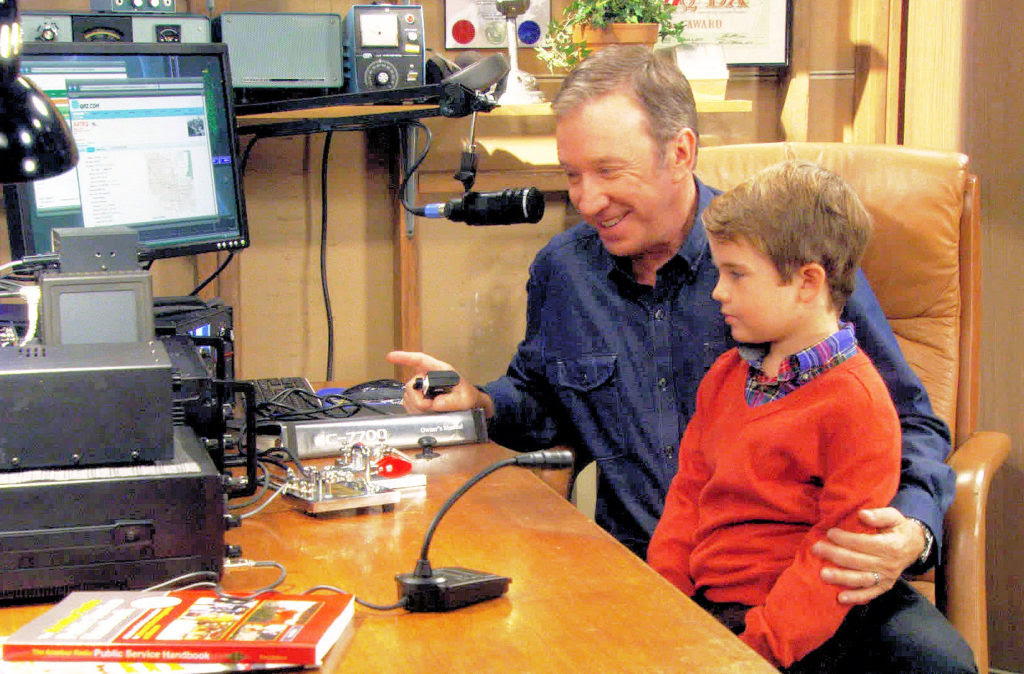
6.  For we Hollywood types, there’s a working ham radio shack on the set of “Last Man Standing,” the TV show on Fox starring Tim Allen of “Home Improvement” fame.  Every once in a while, I’m told that someone on set fires up the on-set radio and communicates with the rest of we mere mortal operators, though I’ve not had that pleasure yet.

Here’s some more details: http://www.arrl.org/news/last-man-standing-moving-to-fox-network   (The photo is from the article.)

7.  You don’t have to be crazy rich to get started.  Once you are licensed, a new, entry-level handheld digital radio can be had for Amazon points, if you have enough of ‘em.  Even if you don’t, you can get in for less than $100 if you watch the sales.  If you’re OK with used equipment, you can get in for about half that.  If amateur radio interests you, cost need not be a barrier to entry.

8.  Ham radio operators help during natural disasters.  Here’s an excerpt of an NPR piece about how amateur radio stepped up to help Puerto Rico in 2017:

MCEVERS: How many messages have you relayed since the hurricane hit?

DOBER: Myself about a hundred.

MCEVERS: Oh, wow. And what’s – what are one or two that, you know, are you know you’re going to remember for a long time?

DOBER: Honestly, there was one woman who – she just broke down in tears when I told her. And she actually called me back five minutes later and she basically asked me, you just called me. And what you told me, I want to hear it again to make sure I heard it right.

MCEVERS: And what had you told her?

DOBER: I told her that, yes, I did call you five minutes ago. And the news I gave you is the news that your loved one is OK.

MCEVERS: And so she just had to hear it one more time?

DOBER: She had to hear it one more time, yes. And like I said, as soon as I told her – and it’s odd because you’re telling people – I mean, I was calling people in California, in Texas. And you’re telling them, hi, I’m from Pittsburgh, Pa., and I have news out of Arecibo for you or out of Puerto Rico. So for them it’s kind of like, what? You know, that’s not the way they’re expecting to get their news.

Here’s the whole article from NPR:  https://www.npr.org/2017/09/29/554600989/amateur-radio-operators-stepped-in-to-help-communications-with-puerto-rico

Here’s another article from NBC:  https://www.nbcnews.com/news/latino/puerto-rico-amateur-radio-operators-are-playing-key-role-puerto-n805426

And one more from CNN: https://www.cnn.com/2017/09/27/us/puerto-rico-maria-ham-radio-operators-trnd/

9.  I’ll quote myself from the original set of observations on this one:

People are people everywhere. I’ve made this observation about every country I’ve physically visited, and the international amateur radio community is no exception. I’ve talked on the radio with people from several different countries. I marvel at the universality of the experience among the operators I hear on the air. Korea, Canada, The Philippines, Australia, the UK, South America. It really shouldn’t surprise me how similar we humans are to our brethren ham operators around the world, but it did. It reinforces my contention that people are people no matter where you go. Governments may suck – and most do – but people are people everywhere. I find that very comforting.

This remains true and still amazes me every time.

10.  This isn’t an observation, but a shout-out to Jeff, aka VE6DV, from Canada who’s just happens to be moving this week.  He is our weekly net controller and runs the net superbly.  He’s all the things that’s right about amateur radio.  He’s helpful, friendly and welcoming.  And the net he runs has gained popularity because of the way he does it.  He deserves public kudos so here they are.

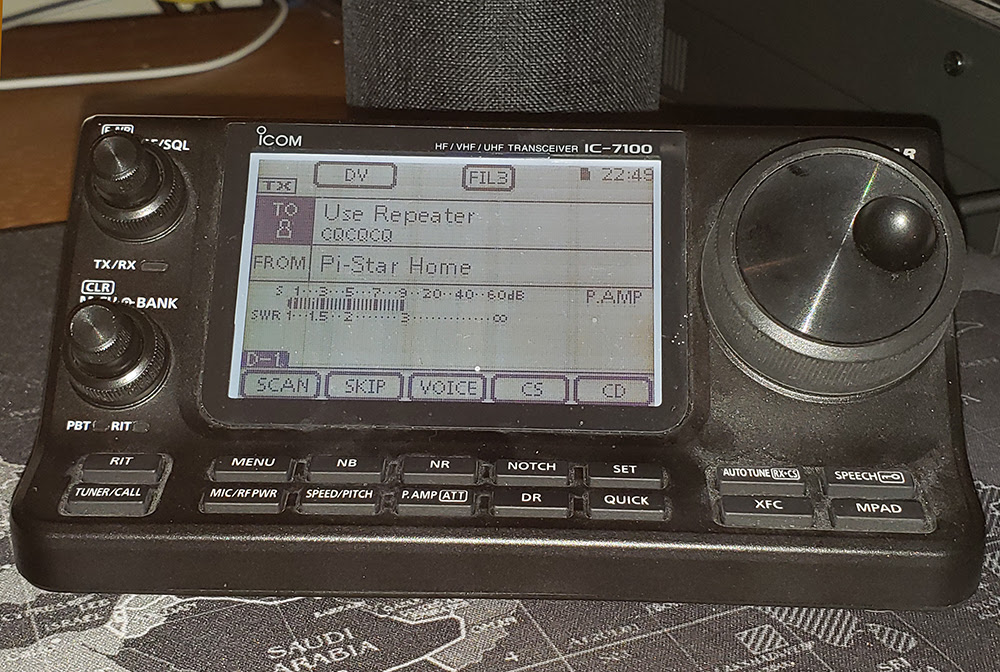
11.  One more shout-out, this time to Andrew Taylor, MW0MWZ, in the UK.  He authors and maintains a software package which allows amateur radio operators to extend their reach from tens of miles to all the miles.  His software makes worldwide communications easy to use.  It’s free and he’s WAY more responsive to questions and answers than any professional tech support company.  So thanks, Andy, for writing and maintaining Pi-Star.  Well done!

Bottom line for me:  I am thankful that my son, Jon (left), poked me in the eye about my license awhile back.  Jon, don’t make the same mistake I did and wait 50 years to get your license.  It’s a great hobby and really tests my technical expertise every time I sit down at the radio. (That’s other son, Andy in the background, circa mid ’90’s.)

If a person’s brain really IS a use-it-or-lose-it proposition as we age, this is a great way to exercise the ol’ noggin.  Amateur radio is a great way to exercise your mind and help keep you sharp. 

This concludes today’s nerd alert.


Many thanks to Dan Wolfe, KN4FYR for sharing his story about when he began his amateur radio journey. You can reach Dan directly at KN4FYR@gmail.com, or leave a reply, below.

Posted in Uncategorized | Leave a reply
Welcome to ICEMARC: Indiana County, PA Posted on July 22, 2024 by Jeffrey TobinJanuary 7, 2025

Be afraid. You must be ready for catastrophic failures and attacks!

The threat of catastrophic power grid failures and large-scale cyberattacks looms larger than ever, posing significant risks to our interconnected society. Recent data paints an alarming picture of our vulnerability to such disruptions.

Recent data paints an alarming picture of our vulnerability to such disruptions. Since 2015, national power outages in the United States have surged by over 150%, driven by increasing demand and extreme weather events exacerbated by climate change. The North American Electric Reliability Corporation (NERC) has issued a stark warning: between 2024 and 2028, up to 300 million people across the United States could face power outages.

These outages are far more than mere inconveniences. The consequences can be severe and far-reaching. During the 2021 Texas winter storm, 4.5 million customers lost power, resulting in over 240 deaths and economic damages estimated at $130 billion. Similarly, the 2021 Pacific Northwest heatwave led to thousands of heat-related emergency department visits and over 700 deaths.The risks extend beyond weather-related incidents. Our increasing reliance on digital systems makes us more vulnerable to large-scale hacking attempts that could potentially cripple power grids, financial systems, and communication networks.NERC’s 2024 Summer Reliability Assessment highlights specific regions at high risk:

  • New England: The retirement of two natural gas-fired generators increases the risk of energy emergencies.
  • The Midwest: Generator retirements and fuel reserve mandates could lead to shortfalls during peak demand.
  • The Southwest: Ongoing severe drought raises the risk of bulk power system disruptions.
  • Texas: Faces potential emergency conditions during summer evenings when solar generation decreases but demand remains high.
  • Worldwide: And just this month, the Microsoft Corporation suffered critical software crashes worldwide, including the cancellation of flights nearly as significantly as 9/11


In a prolonged, widespread outage scenario, the consequences for unprepared individuals could be dire. Without access to communication channels, you may well may find yourself isolated and unable to:

  1. Receive critical emergency information and updates
  2. Contact emergency services for medical or safety assistance
  3. Coordinate with family members or neighbors for mutual aid
  4. Access vital resources such as food, water, or medical supplies
  5. Stay informed about the extent and expected duration of the outage
  6. Participate in community-organized relief efforts

The lack of communication could lead to:

  • Increased panic and misinformation spread through word-of-mouth
  • Difficulty in organizing and distributing resources efficiently
  • Delayed response to medical emergencies or safety threats
  • Heightened vulnerability to crime or exploitation
  • Inability to coordinate evacuation efforts if necessary
  • Psychological stress from isolation and uncertainty


In such scenarios, those who have prepared with amateur radio capabilities would have a significant advantage. ICEMARC helps ham radio operators:

  • Maintain communication with local and distant areas, accessing critical information
  • Coordinate with emergency services and relief efforts
  • Assist in organizing community response and resource distribution
  • Provide a vital link for isolated individuals or communities
  • Help disseminate accurate information and combat misinformation
  • Support search and rescue operations if needed


The importance of amateur radio in emergency preparedness cannot be overstated. While it’s easy to get started with ham radio, the key is to prepare before a crisis hits. ICEMARC provides valuable resources and guidance for those looking to become licensed and integrate amateur radio into their emergency plans.

As we face an increasingly uncertain future with growing threats to our power and communication infrastructure, being prepared with alternative communication methods like amateur radio could make a crucial difference in navigating through potential crises. Contact us today to become informed, licensed and prepared.

Posted in Uncategorized | 2 Replies
Welcome to ICEMARC: Indiana County, PA Posted on July 17, 2024 by Jeffrey TobinAugust 19, 2024

Emergency Field Antenna Solutions for the Prepared Ham

As dedicated amateur radio operators, we understand the critical nature of rapid deployment in emergency situations. Whether you’re participating in a public service event, responding to a disaster, or simply enjoying some portable operations, having a repertoire of quick and efficient antenna setups is invaluable. In this blog, we’ll explore some tried-and-true solutions for both HF and VHF/UHF bands that can be deployed from your vehicle in minutes, catering to the needs of moderately experienced ham radio enthusiasts.

HF Antennas: DX in a Pinch

When it comes to HF operations in the field, balancing efficiency with portability is key. Here are a couple of options that strike that balance well:

1. Hamstick-Style Antennas

These compact, loaded whip antennas are a go-to for many mobile operators. While they don’t offer the efficiency of full-sized antennas, their ease of use is unparalleled. Most Hamsticks are designed for single-band operation, so consider carrying a few to cover your preferred HF bands. Pro Tip: Use a sturdy mount that allows for quick band changes. Some operators prefer a hood or trunk lip mount for added stability and better ground plane characteristics.

2. End-Fed Half-Wave (EFHW) Antennas

EFHW antennas offer excellent performance in a portable package. A 66-foot wire can cover 40-10 meters with an appropriate matching transformer. Here’s a quick setup guide:

  1. Attach one end of the wire to your matching transformer
  2. Run the wire up a tree or portable mast
  3. Connect the transformer to your tuner or radio

For multi-band operation, consider using a 9:1 unun instead of the typical 49:1 for EFHW antennas. This configuration can be more forgiving across multiple bands.

3. Portable Vertical Antennas

Collapsible vertical antennas, like the popular Buddipole or Wolf River Coils systems, offer quick setup and good performance. These can be particularly effective for DX work when set up near a body of water for enhanced ground conductivity.

VHF/UHF: Local Comms Made Easy

For 2 meters and 70 centimeters, we have several options that balance convenience with performance:

1. Magnetic Mount Antennas

The simplicity of mag mount antennas is hard to beat. Look for dual-band antennas with at least 3dB gain. Some models offer a fold-over feature for easy storage. Remember: The larger your vehicle’s roof, the better ground plane it provides, enhancing antenna performance.

2. Roll-Up J-Pole Antennas

These ingenious antennas can be made from 300-ohm ladder line and rolled up for easy storage. When deployed, they offer excellent performance:

  • Omnidirectional pattern
  • Unity gain or slightly more
  • No ground plane required

To set up, simply unroll the antenna and hang it from a tree branch or temporary mast using a non-conductive rope.

3. Portable Yagi Antennas

For situations requiring directional gain, consider a portable Yagi. Many designs can be assembled in minutes and offer significant gain over omnidirectional antennas. This can be particularly useful for working satellites or distant repeaters.

Tips for Rapid Deployment

  1. Practice, practice, practice! Familiarize yourself with your antenna setups before you need them in an emergency.
  2. Create an “antenna go-bag” with all necessary components, adapters, and tools.
  3. Label your antenna elements and parts for quick identification in low-light conditions.
  4. Consider using quick-disconnect connectors like Anderson Powerpoles for coax connections to speed up setup and tear-down.
  5. Keep a laminated checklist of setup steps for each antenna in your go-bag.

Remember, the most effective antenna in an emergency is the one you can deploy quickly and reliably. While these solutions may not match the performance of your home station, they’ll get you on the air fast when it counts. By maintaining a versatile selection of portable antennas and practicing your deployment techniques, you’ll be well-prepared for whatever communications challenges come your way. Stay safe, stay prepared, and happy DXing from the field!

Posted in Uncategorized | Leave a reply
Welcome to ICEMARC: Indiana County, PA Posted on July 9, 2024 by Jeffrey TobinJuly 9, 2024

Getting Started in Ham Radio: The Technician License – Your Gateway to Fun and Safety in Indiana County, PA

Have you ever wondered how you could contribute to your community’s safety while enjoying a fascinating hobby? Look no further than amateur radio, and specifically, the Technician license.

For residents of Indiana County, Pennsylvania, obtaining this entry-level ham radio license is not only easier than you might think but also opens up a world of exciting possibilities. The Technician License: Your First Step into Amateur Radio. The Technician license is the first of three levels in amateur radio licensing. It’s designed to be accessible to beginners while still providing a solid foundation in radio theory and operation. We will help you get started.

Here’s why it’s the perfect starting point:


Easy to obtain: The exam consists of 35 multiple-choice questions, with study materials readily available online and through local clubs.

No Morse code required: Unlike in the past, you don’t need to learn Morse code to get your Technician license.

Quick preparation: Many people pass the exam after just a few weeks of study.

Affordable: The exam fee is typically under $15, making it a budget-friendly entry into the hobby.

Fun Benefits of the Technician License: Once you’ve earned your Technician license, a whole new world of communication opens up:

Local communications: You’ll have full operating privileges on all amateur radio frequencies above 30 MHz, perfect for local conversations.

Handheld radios: Many Technicians start with simple handheld radios, allowing for portable communications.

Repeater networks: Access local repeaters to extend your communication range across Indiana County and around the world.

Satellite operations: Yes, even with a Technician license, you can communicate through amateur radio satellites!

Digital modes: Explore text-based communication methods like packet radio and APRS (Automatic Packet Reporting System).

Community events: Participate in local ham radio events, contests, and gatherings in Indiana County.

Safety Benefits for You and Your Community::Beyond the fun aspects, your Technician license equips you with valuable skills for emergency situations:

Emergency communications: When cell networks fail, your radio skills could be crucial for family and community safety.

Weather spotting: Many Technicians participate in SKYWARN, providing vital weather observations to the National Weather Service.

Community service: Assist with communications for local events like parades, marathons, and disaster drills in Indiana County.

Personal preparedness: Your radio skills and equipment enhance your family’s emergency readiness.

Local emergency networks: Join ICEMARC to participate with regional emergency service groups to support your community during disasters.

Getting Started in Indiana County, PA.

Ready to dive in? Here’s how to get started:

  1. Study materials: Download free study guides or purchase books specifically designed for the Technician exam.
  2. Practice tests: Take online practice exams to gauge your readiness.
  3. Local resources: Connect with the Indiana County Amateur Radio Club for study sessions and exam preparation help.
  4. Schedule your exam: Find upcoming exam sessions in Indiana County through the ARRL website.
  5. Basic equipment: After passing, start with a simple handheld radio to begin exploring the airwaves.


Remember, the amateur radio community is known for its welcoming and helpful nature. Don’t hesitate to reach out to local operators in Indiana County for advice and mentorship. The Technician license is just the beginning. As you grow in the hobby, you might consider upgrading to General and Extra class licenses, which offer even more operating privileges. By obtaining your Technician license, you’re not just starting a hobby; you’re joining a community of operators dedicated to communication, technology, and public service. In Indiana County, your new skills could make a real difference in emergency situations while providing you with a fun and educational pastime.

Don’t let the technical aspects intimidate you. The journey to becoming a licensed amateur radio operator is easier than ever, and the rewards are immense. Take the first step today towards enhancing your personal skills, contributing to your community’s safety, and joining a global network of radio enthusiasts. Contact us here at ICEMARC, the Indiana County Emergency Management Emergency Radio Club, or attend out next meeting to learn more about getting your Technician license. Your adventure in the world of ham radio is just beginning, and ICEMARC is the perfect place to start!

Posted in Uncategorized | Leave a reply
Welcome to ICEMARC: Indiana County, PA Posted on July 9, 2024 by Jeffrey TobinAugust 19, 2024

Amateur Radio: More Than a Hobby – A Critical Community Resource in Indiana County, PA

When most people think of amateur radio, they might envision a niche hobby for technology enthusiasts. However, for residents of Indiana County, Pennsylvania, and communities across the nation, amateur radio represents much more than a pastime.

Ham radio is a vital communication lifeline during emergencies and a crucial asset for local resilience. In an era where we rely heavily on cellular networks and internet-based communication, it’s easy to overlook the vulnerability of these systems. Natural disasters, power outages, or even cyber-attacks can quickly render our everyday communication methods useless. This is where amateur radio shines as the foundational form of communication in times of crisis.

Why Amateur Radio is Critical for Emergency Communications: 1. Reliability: When other systems fail, amateur radio often remains operational. Battery-powered radios and portable antennas allow for communication even in the most challenging conditions. 2. Independence: Amateur radio doesn’t rely on complex infrastructure. Operators can establish direct communication without intermediary networks or power grids. 3. Versatility: From voice to digital modes, amateur radio offers multiple ways to transmit information, adapting to various emergency scenarios. 4. Wide coverage: With the right equipment and knowledge, ham radio operators can communicate locally, nationally, or even globally. 5. Community network: Amateur radio operators form a robust network of skilled communicators ready to assist in emergencies. For Indiana County residents, involvement in amateur radio isn’t just about personal preparedness—it’s about contributing to the community’s resilience. And you can easily learn and become a part of our many programs at ICEMARC.

Here’s how your participation can make a difference: 1. Emergency response support: During disasters, amateur radio operators often work alongside first responders, providing crucial communication support when other systems are down. 2. Weather monitoring: Many ham radio operators participate in SKYWARN, providing real-time severe weather reports to the National Weather Service. 3. Community events: From parades to marathons, amateur radio operators often provide communication support for local events, enhancing public safety. 4. Educational opportunities: By sharing your knowledge, you can help others in the community prepare for emergencies and understand the importance of diverse communication methods. 5. Intergenerational connections: Amateur radio appeals to all ages, creating opportunities for mentorship and knowledge sharing across generations in Indiana County. Getting involved in amateur radio is easier than you might think.

The first step is obtaining your FCC license, which involves passing a simple exam. Our club in Indiana County offers classes plus exam sessions to help you get started. ICEMARC is an excellent resource for learning, networking, and participating in community service activities. Once licensed, you can set up a home station or invest in portable equipment. We can help! Also, many operators find that handheld radios are perfect for emergency preparedness and community events. Regular practice through local nets (scheduled on-air meetings) and participation in emergency drills will help you hone your skills and build connections with other operators in the area. Remember, your involvement in amateur radio extends beyond personal benefit.

By becoming a licensed operator, you’re adding to the community’s emergency communication capacity. In times of crisis, when cell phones and internet connections fail, your ability to establish communication could be crucial for your family, neighbors, and local emergency services. As we face increasing uncertainties in our interconnected world, the role of amateur radio in emergency preparedness becomes ever more critical. For Indiana County residents, embracing this “hobby” means more than just exploring an interesting technology—it means becoming an essential part of the community’s resilience and safety net.

Don’t wait for the next emergency to highlight the importance of diverse communication methods. Take the step today to explore amateur radio is to use the Contact Us link at the bottom of this page. Visit us right here inIndiana County, PA, to learn how you can turn a fascinating hobby into a vital community service. In doing so, you’ll not only enhance your own preparedness but also contribute to the safety and well-being of your entire community.


Contact Us

ICEMARC
112 Quincy Circle
Indiana, PA 15701

Join our Mailing List

Posted in Uncategorized | Leave a reply
Welcome to ICEMARC: Indiana County, PA Posted on July 9, 2024 by Jeffrey TobinJuly 9, 2024

Amateur Radio: Your Lifeline During Power and Cellular Outages

In today’s interconnected world, we often take our ability to communicate for granted. However, recent events have shown that our power and cellular networks are more vulnerable than we might think.

The February 2024 AT&T outage left thousands of Americans without cellphone service for hours, highlighting the fragility of our communication infrastructure. While this particular incident was attributed to a technical glitch, it serves as a stark reminder of how quickly our modern communication systems can fail.

Power outages, whether caused by severe weather, equipment failures, or other unforeseen circumstances, can leave entire regions in the dark and disconnected. So, how can you stay connected when the lights go out and cell towers go silent? The answer lies in a time-tested technology that has been connecting people for over a century: amateur radio. Amateur radio, also known as ham radio, offers a robust and reliable means of communication that operates independently of commercial power grids and cellular networks. For residents of Indiana County, Pennsylvania and beyond, embracing amateur radio can provide an invaluable backup for emergency communications.

Here’s why amateur radio stands out as the best solution for maintaining contact during widespread outages: 1. Independence from infrastructure: Unlike cellphones, amateur radio doesn’t rely on centralized networks or power grids. With a battery-powered radio and a simple antenna, you can communicate over vast distances. 2. Versatility: Amateur radio operators can use various modes of communication, including voice, digital, and even satellite relays, ensuring multiple options for getting messages through. 3. Community network: The amateur radio community is known for its spirit of mutual aid. During emergencies, local operators often band together to relay messages and provide assistance. 4. Low cost: Once you’ve obtained your license (we an help you with that!) and basic equipment, operating costs are minimal, making it an affordable long-term communication solution. 5. Educational value: Learning about radio technology can be a fascinating hobby that also prepares you for emergency situations.

For families in Indiana County looking to stay connected during potential outages, getting involved with ICEMARC, the Indiana County Emergency Management Agency Radio Club is easier than you might think. The first step is to obtain contact us. You can use the link found at the bottom of every page on our site. Next, you can get your FCC license by passing a simple exam. ICEMARC, right here in Indiana County, offers classes and exam sessions to help you get started. Once licensed, you can set up a home station or invest in portable equipment for on-the-go communications. Many operators find that handheld radios, which can easily fit in a go-bag, are perfect for emergency preparedness. It’s important to practice your radio skills regularly. Participating in local nets (scheduled on-air meetings) and emergency drills can help you stay sharp and build connections with other operators in your area.

Remember, when cell towers fail and the power goes out, amateur radio operators are often among the first to reestablish communications. By joining their ranks, you’re not just preparing yourself and your family for emergencies – you’re also becoming part of a community dedicated to helping others in times of need. Don’t wait for the next outage to catch you off guard. Take steps today to explore the world of amateur radio and ensure that you have a reliable means of communication, no matter what challenges may arise. Connect with us, ICEMARC in Indiana, PA, to learn more about getting started with this vital skill. In an age of increasing uncertainty, amateur radio stands as a beacon of resilience and community spirit. It’s more than just a hobby – it’s a lifeline that could make all the difference when conventional communication methods fail.

Posted in Uncategorized | Leave a reply
Welcome to ICEMARC: Indiana County, PA Posted on July 9, 2024 by Jeffrey TobinJanuary 7, 2025

When Ham Radio Was There to Save the Day

Hey there, fellow radio enthusiasts and emergency preparedness advocates! We are ICEMARC the Indiana County Emergency Management Agency Radio Club, and here are some incredible stories about how amateur radio has been making a real difference in emergencies across the country.

This past year has been a testament to the power of ham radio in crisis situations.

When Hurricane Idalia slammed into Florida’s Gulf Coast, amateur radio operators became the unsung heroes of communication. As cell towers toppled and power lines failed, we were there, relaying critical information about evacuation routes and coordinating rescue efforts. It’s not an exaggeration to say that lives were saved thanks to these dedicated operators.

The Maui wildfires presented another challenge where ham radio shone. When conventional systems were overwhelmed, amateur radio operators provided real-time updates on fire movements and assisted in evacuation efforts. Our ability to operate independently of infrastructure proved invaluable in those chaotic early hours.

During a recent, severe Midwest ice storm, ham radio operators once again stepped up to the plate. We provided essential weather updates, coordinated with utility companies, and helped emergency services reach isolated communities. It’s in these moments that the true value of amateur radio becomes crystal clear. But it’s not just the headline-grabbing disasters where we make a difference. ARES volunteers have been instrumental in less publicized emergencies too, like flash floods, where they’ve helped coordinate search and rescue operations and direct resources where they’re needed most.

These examples underscore the continued importance of amateur radio in emergency preparedness and response. As natural disasters become more frequent, the resilience and flexibility of ham radio networks provide a critical backup to modern communication systems.

If you’re in or near Indiana, Pennsylvania, and you’re interested in being part of this vital service, we’d love to hear from you. ICEMARC is always ready to welcome new members and show them the ropes of emergency communications. It’s more than just a hobby – it’s a way to serve our community when it matters most.

Remember, when all else fails, amateur radio prevails. You can join us in making a real difference in emergency preparedness and response.

Posted in Uncategorized | Leave a reply
Welcome to ICEMARC: Indiana County, PA Posted on July 9, 2024 by Jeffrey TobinJuly 9, 2024

Exploring Amateur Radio in Indiana County: A Guide for Beginners and Enthusiasts of Amateur radio.

For hobbyists who want to communicate across the globe using various radio frequencies in Indiana County, Pennsylvania, the Indiana County Emergency Management Agency Radio Club (ICEMARC) serves as a hub for both newcomers and experienced operators alike.

If you’re interested in getting started with amateur radio, the first step is to obtain your license. ICEMARC offers regular VE (Volunteer Examiner) test sessions throughout the year. We offer licencing tests at the Indiana County 911 Center. And getting started is really easy. We’ll help you. For your licensing test, you’ll need to pre-register and obtain an FCC Federal Registration Number (FRN). Once licensed, you can join ICEMARC and take advantage of our many activities and resources. We also have many activities for those who are not yet licensed, so don’t let that stop you from joining in the fun! We hold monthly meetings on the third Tuesday of every month at the Indiana Mall across from Auntie Ann’s Pretzels. These gatherings are perfect for networking, learning, and staying up-to-date with the latest in amateur radio.

One of the most exciting events in the amateur radio calendar is Field Day, scheduled twice a year… once in June and again in January. It’s a 24-hour contest and is an excellent opportunity to practice emergency communications and enjoy the camaraderie of fellow enthusiasts.

ICEMARC also maintains a robust repeater system. Our 2m repeater operates on 146.745 MHz -0.600 with a PL tone of 131.8 Hz. Our repeater is an invaluable for local communications and emergency preparedness. For those interested in public service, ICEMARC hosts a weekly Net every Monday at 8:00 PM on our 2m repeater. Participating in these Nets is an excellent way to improve your radio skills and contribute to the community. If you’re new to the hobby, don’t worry! ICEMARC welcomes all interested individuals, regardless of license status or residency. The club offers support and resources to help you get started and advance your skills.

To stay connected with the local amateur radio community, you’ll want to participate with us in ICEMARC. There are no membership fees and anyone is welcome.

Whether you’re a beginner looking to get your first license or an experienced operator seeking to expand your horizons, Indiana County’s amateur radio scene has something for everyone. Join ICEMARC and discover the exciting world of ham radio in our community! See the Contact Us button below. Do it now!

Posted in Uncategorized | Leave a reply

Post navigation

Newer posts →

WB3CGY Repeater

Downlink: 146.745
Negative offset of -0.600 MHz
PL tone of 131.8.
All amateur radio operators are welcome.
Monday night Net: 8:00 PM local time.


December 2025

Sun Mon Tue Wed Thu Fri Sat
1
  • Weekly ARES Net

    Weekly ARES Net: 8:00 pm - 8:30 pm


    WB3CGY Repeater

    Downlink: 146.745
    Negative offset of -0.600 MHz
    PL tone of 131.8.
    All amateur radio operators are welcome.

    Find the ARES Net List and ARES Net Preamble HERE

•
2
3
4
5
  • ICEMARC Founding Anniversary

    ICEMARC Founding Anniversary: 12:00 am - 11:59 pm

    On this date, ICEMARC dissolved its relationship with ICARC and formed a new entity. Our mission is to promote the enjoyment of amateur radio, offer education, and provide a communications network for Indiana County, PA, and for the Indiana County Emergency Management Agency.

  • WPA VHF Net

    WPA VHF Net: 9:00 pm - 9:30 pm

    The first net is at 9:00 PM on 146.520 FM. When that net completes they start a net on 144.200 SSB.

• •
6
7
8
  • Weekly ARES Net

    Weekly ARES Net: 8:00 pm - 8:30 pm


    WB3CGY Repeater

    Downlink: 146.745
    Negative offset of -0.600 MHz
    PL tone of 131.8.
    All amateur radio operators are welcome.

    Find the ARES Net List and ARES Net Preamble HERE

•
9
10
11
12
13
  • Fort Armstrong Club Monthly Breakfast

    Fort Armstrong Club Monthly Breakfast: 9:00 am - 10:00 am Cadet Restaurant, 13514 US-422, Kittanning, PA 16201, USA

•
14
15
  • Weekly ARES Net

    Weekly ARES Net: 8:00 pm - 8:30 pm


    WB3CGY Repeater

    Downlink: 146.745
    Negative offset of -0.600 MHz
    PL tone of 131.8.
    All amateur radio operators are welcome.

    Find the ARES Net List and ARES Net Preamble HERE

•
16
  • ICEMARC Dine @ Five!

    ICEMARC Dine @ Five!: 4:45 pm - 6:00 pm

    Join us at Perkins, 1871 Oakland Ave. Indiana, PA. at 4:45 PM to relax and enjoy a quick meal before the ICEMARC 3rd Tuesday monthly gathering that starts at 6:00 PM at the EMA. 85 Haven Drive, Indiana, PA.

  • ICEMARC 3rd Tuesday Monthly Gathering

    ICEMARC 3rd Tuesday Monthly Gathering: 6:00 pm - 7:30 pm 85 Haven Dr, Indiana, PA 15701, USA

• •
17
18
19
20
21
22
  • Weekly ARES Net

    Weekly ARES Net: 8:00 pm - 8:30 pm


    WB3CGY Repeater

    Downlink: 146.745
    Negative offset of -0.600 MHz
    PL tone of 131.8.
    All amateur radio operators are welcome.

    Find the ARES Net List and ARES Net Preamble HERE

•
23
24
25
26
27
28
29
  • Weekly ARES Net

    Weekly ARES Net: 8:00 pm - 8:30 pm


    WB3CGY Repeater

    Downlink: 146.745
    Negative offset of -0.600 MHz
    PL tone of 131.8.
    All amateur radio operators are welcome.

    Find the ARES Net List and ARES Net Preamble HERE

•
30
31

©2025 - Welcome to ICEMARC: Indiana County, PA - Weaver Xtreme Theme
↑